
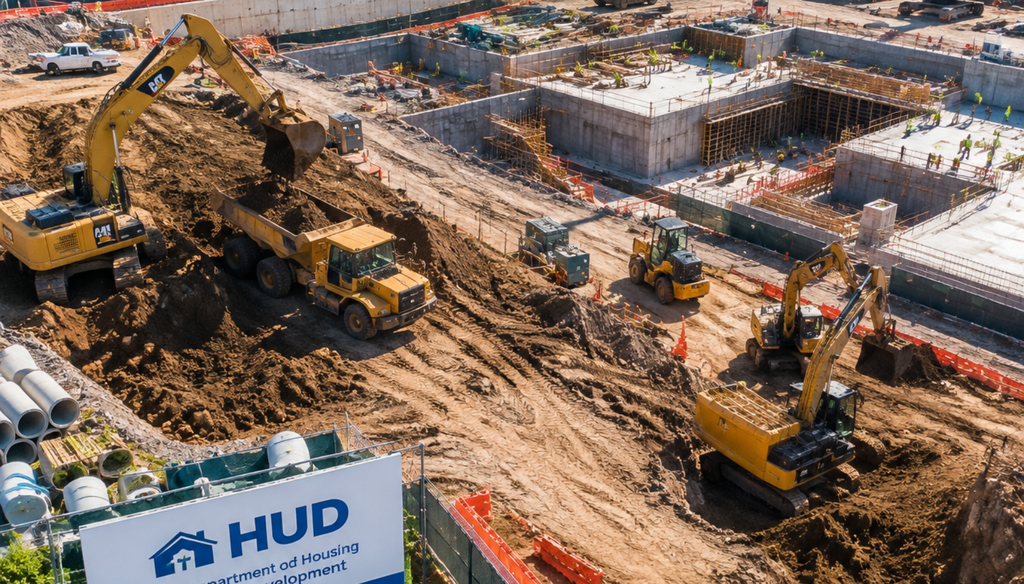
Winning a HUD-funded construction project is an opportunity to grow your business, but staying profitable means understanding compliance requirements before work begins.
One area that can create confusion is Section 3 Business eligibility. A subcontractor may be local, small, or already working in the community, but that doesn’t automatically mean it qualifies as a Section 3 Business Concern under HUD requirements.
For contractors and project owners, the challenge is making sure the right businesses are identified, their eligibility is properly documented, and Section 3 responsibilities are built into the project from the start. Getting this right helps prevent documentation gaps, keeps subcontractor coordination on track, and gives your team greater confidence during compliance reviews.
Understanding what qualifies as a Section 3 Business Concern is the first step toward building a reliable compliance process that protects your project, profitability, and timeline.
What Is a Section 3 Business Concern – and Why It Matters
A Section 3 Business Concern is simply a company that qualifies to provide economic opportunities to low-income workers under HUD’s Section 3 program. Under HUD’s Section 3 rules, a business qualifies if it meets at least one of three criteria: at least 51% ownership and control by low- or very-low-income persons; over 75% of its labor hours during the prior three-month period performed by Section 3 workers; or at least 51% ownership and control by current public housing residents or residents receiving Section 8-assisted housing. Business status must be documented within the applicable six-month qualification period. Why it matters: If your project receives HUD assistance above the Section 3 threshold, Section 3 goals kick in. For qualifying HUD housing and community development projects, Section 3 generally applies when applicable HUD assistance exceeds $200,000. A $100,000 threshold applies to certain Lead Hazard Control and Healthy Homes projects. Public housing financial assistance follows different applicability rules. In practice, this means contractors must actively involve eligible Section 3 businesses and workers. Failing to do so can disrupt cash flow and cause fines: owners expect compliance plans up front, and auditors will check that you pursued these local hiring and contracting goals.
Common mistakes: Many contractors skip verifying Section 3 status or confuse it with other small-business programs. Others assume a subcontractor’s nickname (like “Neighborhood Plumbing”) implies Section 3 status. Without appropriate documentation, contractors may be unable to substantiate a business’s Section 3 status or the qualifying worker labor hours reported toward HUD benchmarks. Business certification alone does not automatically establish every employee’s eligibility. Experienced teams avoid this trap by learning the criteria and insisting on proof before contract award. (For example, HUD FAQs and local agencies stress that a business must prove it meets one of the three tests.)
Key point: Section 3 isn’t a bonus – it’s a contractual requirement on covered projects. Owners should confirm that their contractors understand the definition and have a plan for tracking Section 3 participation. Contractors who treat Section 3 like any other compliance item avoid surprise payroll corrections and build trust with owners and communities alike.
Certifying and Managing Section 3 Business Status
Once you know the definition, the next step is to verify and document it. Don’t take verbal claims at face value. Contractors should require any subcontractor or supplier that wants Section 3 credit to submit a self-certification with evidence. These forms (often labeled “Section 3 Business Concern Certification” or similar) document the ownership and workforce facts behind the status. For example, Kansas’s HUD plan explicitly requires contractors to have subs fill out a Section 3 certification form and provide backup (tax forms, payroll reports, etc.). Keep copies of every certification.
In addition, record your outreach: maintain logs of emails or calls made to Section 3 businesses about upcoming work. (Some agencies make this mandatory: San Diego’s housing authority counts a bid non-responsive if it lacks outreach documentation to Section 3 firms.) Posting job notices in local media or on specialized registries (e.g., NYC’s Section 3 Registry) also creates a paper trail.
Above all, track everything. Build Section 3 documentation into your compliance system (just as you would for certified payroll). For instance, use your project management software or daily log to flag which subcontractors are Section 3-certified and note any Section 3 worker assignments. Store these records with your contract files. When auditors ask, you’ll want to show concrete evidence (cert forms, outreach logs, meeting minutes, etc.) that you actively engaged Section 3 resources.
Documentation Contractors Should Maintain
– Section 3 Business Self-Certification Forms: Document whether a subcontractor meets HUD’s Section 3 business concern criteria. Keep the completed certification and any supporting evidence required by the HUD recipient or project owner.
– Outreach Logs: Record emails, calls, invitations to bid, and other efforts to engage Section 3 businesses. These records help demonstrate the steps taken to provide contracting opportunities and support compliance reviews.
– Timecards and Labor-Hour Records: Track total project labor hours, Section 3 worker hours, and Targeted Section 3 worker hours. Maintain appropriate worker eligibility documentation and reconcile these records with payroll information to support accurate reporting.
Important: Section 3 business certification does not automatically mean every employee qualifies as a Section 3 worker. Document worker eligibility and qualifying labor hours according to applicable HUD requirements.
Tracking Participation: From the Field to the Final Report
On Section 3 projects, tracking is not optional – it’s built into the rule. Contractors must report total labor hours and Section 3 labor hours to owners or HUD. (In fact, HUD’s new rule measures compliance by labor hours rather than just subcontract percentages.) In practice, this means adding Section 3 indicators to your payroll or timekeeping system. Use a separate Section 3 tracking field or worksheet connected to project timekeeping records. Track total labor hours, Section 3 worker hours, and Targeted Section 3 worker hours based on documented eligibility. Keep Section 3 reporting distinct from Davis-Bacon certified payroll requirements.
Experienced teams integrate this into weekly payroll review. Before you submit any certified payroll, cross-check worker addresses, certification forms, or sub IDs. Confirm that every subcontractor claiming Section 3 status genuinely provided goods or labor, and that the recorded hours match your site logs. If you find errors (e.g., hours counted under the wrong category), fix them immediately. Remember: HUD and housing authorities often monitor via payroll and worker reports. Neat, consistent records mean the difference between clearing an audit in minutes or spending weeks explaining gaps.
On the project timeline, schedule periodic compliance check-ins. If your contract includes specific Section 3 goals (like New York’s 25% labor-hour benchmark), review progress monthly. If targets lag, accelerate outreach or adjust hiring plans. Above all, coordinate with project leadership (owners’ reps, project managers, etc.) so everyone treats Section 3 as an operational priority rather than a last-minute paperwork task. Integrating Section 3 into your internal compliance system – as you would with Davis-Bacon payroll or safety reporting – turns a regulatory burden into a routine practice.
Conclusion
Section 3 compliance isn’t just an audit checkbox – it’s a project management discipline that protects your margins. When project teams prepare early and maintain accurate documentation, they reduce reporting gaps, avoid last-minute corrections, and strengthen their ability to demonstrate Section 3 compliance. Proactive Section 3 planning helps you tap qualified local labor and businesses in a way that satisfies both HUD and the community. It keeps payments on time and bids competitive, ultimately safeguarding profitability and reputation.
Done right, Section 3 compliance is good business. By building simple processes to certify eligible firms, track Section 3 hours, and record outreach, your team minimizes risk. You’ll meet regulatory goals without delaying the job – and build goodwill by delivering federal projects that truly benefit local workers.
If your next HUD-funded project is on deck, let’s make sure Section 3 is a strength, not a weakness. Book a Prevailing Wage Strategy Session today to align your payroll and procurement processes. We’ll help you identify any gaps, train your team on Section 3 rules, and create an audit-ready plan that keeps your project on schedule and on budget.